February 2025
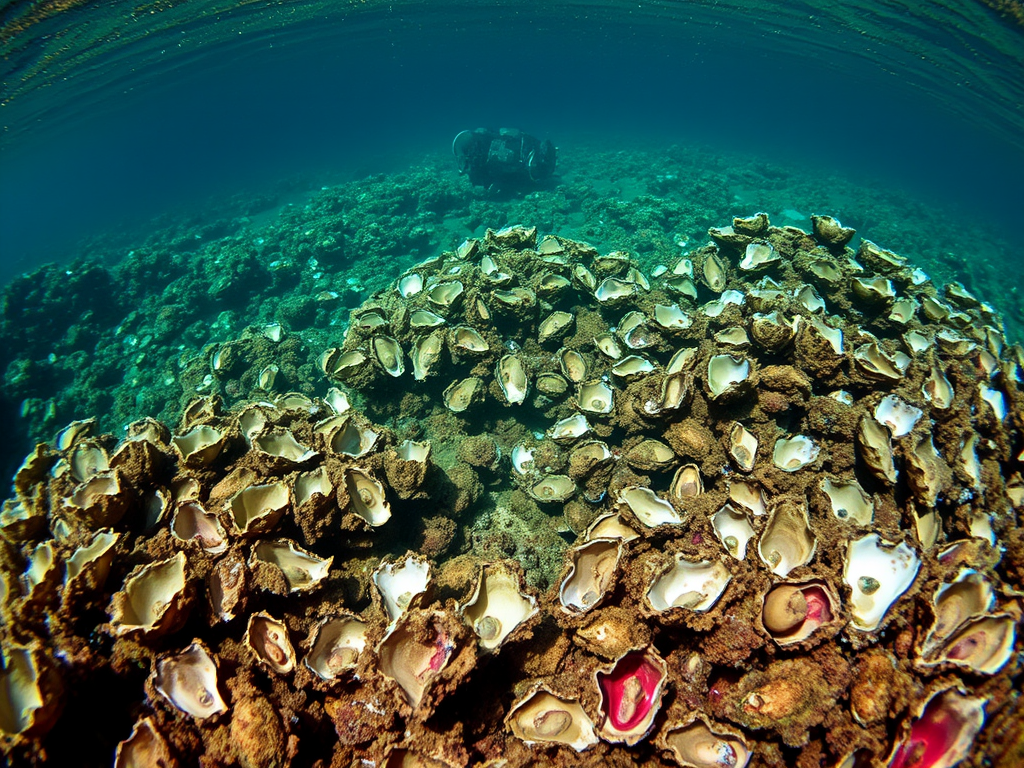
Oysters are like the architects of the ocean because they support a variety of marine ecosystems. By forming reefs, they create habitats for a huge number of species, from tiny invertebrates to large fish. They provide shelter and food that help maintain biodiversity. Oyster reefs also act as the foundation for many ecosystems such as seagrass beds.
Oysters are also the ocean’s filtration system. As filter feeders, they draw in water, trap particles like algae and sediment, and release cleaner water back into the environment. One oyster can filter up to a gallon of water an hour. Oysters improve water clarity so that the sun’s rays can reach seagrass and other plants at the bottom of the ocean. Oysters also reduce excess nutrients such as nitrogen, which can cause toxic algal blooms. By keeping nutrient levels in check, oysters help keep aquatic ecosystems in balance.
For coastal communities, oyster reefs offer important flood protection. Acting like natural breakwaters, they absorb wave energy, reducing erosion and protecting shorelines. This makes them invaluable in the face of climate change and rising sea levels, as they help protect coastal homes and communities.
Supporting initiatives like oyster farming and oyster shell recycling to increase oyster populations will help protect the benefits oysters bring to our oceans.
 Our Blue Backyard
Leave a comment