Scientists in China have published evidence that oyster farms may be naturally removing carbon in indirect ways, not just through the carbon capture of their shells. The experiment showed that oyster beds can reduce phytoplankton levels (due to oysters’ filter feeding). Phytoplankton respire carbon, so this decrease in phytoplankton results in an overall carbon decrease in our oceans. https://phys.org/news/2025-09-oysters-carbon-ocean-sustainable-food.html?
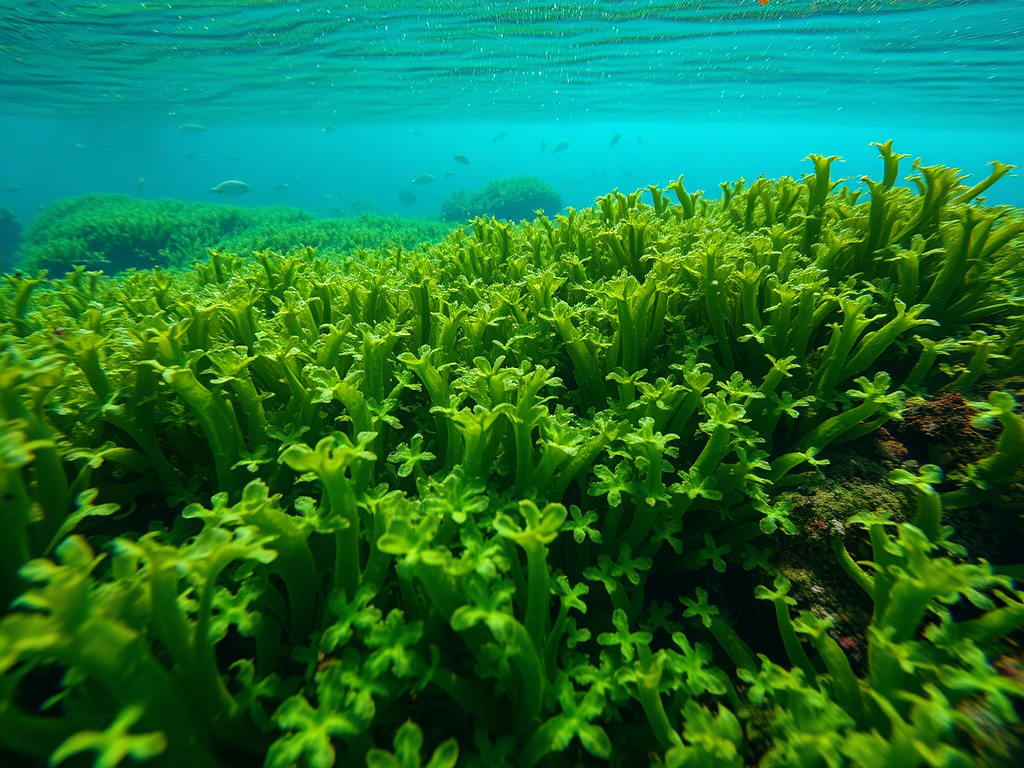
Another study by an international research group, published in Nature Geoscience, showed that seaweed forests also play a much bigger role in the ocean’s carbon cycle then we initially realized. Seaweed forests grow quickly, and when pieces break off and decay, that material drifts away from the coast. The study found that a large amount of this seaweed-derived carbon travels into deeper parts of the ocean, sinking it there.
Using data on seaweed growth, ocean currents, and the way the organic material breaks down, the researchers estimated that seaweed forests capture about 56 million tons of carbon each year, with a range of 10 to 170 million tons.
Comparing this to the ocean’s total natural carbon-sink capacity, seaweed may contribute around 3–4% of the carbon that the ocean removes and stores each year. https://plymsea.ac.uk/id/eprint/10234/1/s41561-024-01449-7.pdf
 Our Blue Backyard
Leave a comment